Used parts buying and sourcing

Used Auto Parts Sourced Across the USA

Request used car parts online with the vehicle, component, fitment, and destination details kept together. Doorstep Auto Parts reviews used replacement-part requests for delivery across the USA based on fitment and sourcing availability.

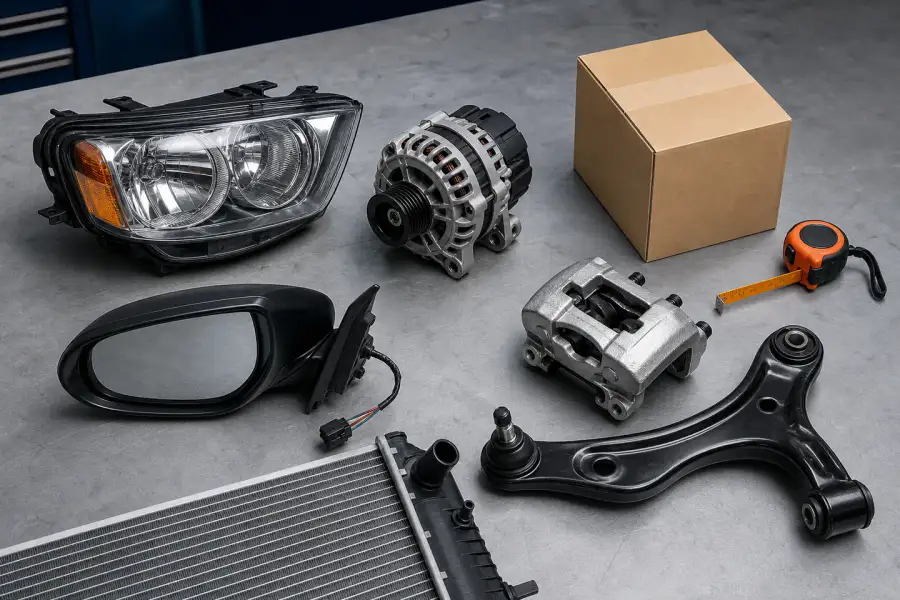
Automotive replacement components arranged for identification
Condition and sourcing context

A practical route to the right used replacement part.

Used auto parts are components that have previously been installed on another vehicle. They can be useful when an original assembly is no longer readily available as a new service part, when preserving original equipment is important, or when the repair calls for a complete assembly rather than several separate pieces.

Condition alone does not establish fitment or quality. Two parts with the same general name may differ by production date, engine, drivetrain, body style, option package, connector, calibration, gear ratio, or mounting design. A useful used-parts request therefore starts with the exact vehicle and the identifiers on the component being replaced.

Doorstep Auto Parts helps customers request second-hand auto parts and used replacement components. Send the year, make, model, VIN when available, part name, and delivery ZIP so the sales team can review matching sourcing options and discuss the request with you.

Definition

What buying used means

A used component may be an original-equipment assembly removed from a donor vehicle, but the words used and OEM do not mean the same thing. Used describes the part's condition or history; OEM describes its original manufacturer or vehicle-maker part identity. Confirm both separately when the distinction matters to the repair.

Ask what is included with the assembly and how it is identified. Sensors, modules, brackets, wiring, trim, hardware, torque converters, accessories, and covers may or may not accompany the main component. Written order details should make that scope clear before installation begins.

Repair context

When customers consider used parts

Used engines and transmissions are often considered when a major assembly needs replacement and the exact application can be identified. Used doors, hoods, fenders, mirrors, headlights, tail lights, wiring harnesses, ECM or ECU modules, alternators, and cooling components may also be appropriate candidates when condition and compatibility can be reviewed.

Some wear items, one-time-use hardware, and safety-sensitive components call for extra caution or a new replacement. The repairer should determine what is suitable for the vehicle, inspect the delivered component, and follow the relevant service and installation information.

Fitment checklist

Used-part fitment starts with evidence.

The more precisely the original part and vehicle are identified, the less the request depends on guesswork.

Vehicle identity

Provide the year, make, exact model, engine, drivetrain, trim, body style, and production date when relevant.

VIN and original numbers

Include the full VIN and readable part, tag, casting, axle, or transmission codes whenever they are available.

Condition and included pieces

Clarify visible condition, inspection information, and every sensor, bracket, module, or accessory expected with the part.

Installation planning

Ask a qualified repairer about programming, calibration, fluids, seals, supporting repairs, and transferred components before ordering.

Browse by vehicle system

Common used auto-part categories.

Start with the vehicle system, then identify the exact component name and fitment details needed for the repair.

Used Engine & Drivetrain Parts

Power-producing assemblies, internal engine components, transmissions, axles, and driveline hardware.

Used Body & Exterior Parts

Exterior panels, closures, trim, and structural body pieces used in collision repair and restoration.

Used Electrical & Lighting Parts

Starting, charging, control-module, wiring, lighting, and powered accessory components.

Used Cooling & HVAC Parts

Parts that regulate engine temperature and heat, cool, or move air through the cabin.

Used Steering & Suspension Parts

Components that control direction, alignment, ride quality, and wheel movement.

Used Brake Parts

Hydraulic, mechanical, and electronic parts used to slow and hold the vehicle.

Used Fuel & Air Parts

Components that store and deliver fuel and manage the air entering the engine.

Used Exhaust & Emissions Parts

Parts that route exhaust gases, manage heat, and support emissions-control functions.

Used Interior & Accessory Parts

Cabin assemblies, controls, trim, seating, storage, and driver-information components.

Used Glass & Mirror Parts

Visibility components including fixed glass, movable glass, mirrors, and window mechanisms.

Used Wheel & Hub Parts

Wheel-end components that support the vehicle and allow the wheels to rotate securely.

Used Safety & Restraint Parts

Occupant-restraint and collision-safety components that require careful position and fitment matching.

Used Frame & Underbody Parts

Chassis structures, crossmembers, protective panels, and mounting hardware beneath the body.

Used Hybrid & Electric Parts

High-voltage propulsion, charging, power-conversion, and battery-control components for electrified vehicles.

Browse the complete Parts directory
Component guidance

Used Auto Parts by Component

Use these component guides to understand function, fitment, and matching details before requesting a used replacement option. Each destination remains the canonical Part guide rather than a separate condition-specific route.

Used EngineMatch engine code, displacement, emissions application, production range, and included accessories.Used TransmissionConfirm transmission identity, drivetrain, gear count, electronic controls, and application codes.Used Transfer CaseIdentify drivetrain system, case code, controls, connectors, and original numbers.Used DifferentialConfirm axle position, ratio, drivetrain, housing, and assembly identity.Used Axle AssemblyMatch front or rear position, ratio, drivetrain, brakes, hubs, and mounting.Used AlternatorConfirm output, pulley, connector, mounting pattern, and vehicle electrical package.Used StarterVerify engine application, mounting position, electrical connections, and identifiers.Used Wiring HarnessHarness routing, connectors, engine, body configuration, and option content must align.Used Engine Control ModuleVerify the original number, software application, security pairing, and programming needs.Used Front BumperCheck trim, sensor and camera openings, exterior design, and assembly scope.Used DoorMatch side, position, body style, wiring, glass, trim, and included hardware.Used HeadlightMatch side, lamp technology, adaptive features, modules, and connector design.Used Tail LightCheck body style, side, lens design, LED equipment, connector, and trim level.Used RadiatorCompare dimensions, inlet and outlet positions, transmission cooling, sensors, and mounting points.Used AC CompressorConfirm refrigerant system, drive type, connector, mounts, and original number.Used Steering RackIdentify steering system, drivetrain, mounting, connectors, and ratio.Used ABS ModuleMatch hydraulic and electronic identifiers, connectors, calibration, and equipment.Used Fuel PumpConfirm fuel type, tank or engine position, module design, connector, and pressure application.Used Front SeatSpecify side, upholstery, powered features, connectors, sensors, and restraint equipment.Used DashboardMatch interior color, trim, controls, safety equipment, and included assemblies.Used WheelVerify diameter, width, bolt pattern, offset, center bore, finish, and style.Used Wheel HubConfirm axle position, driven application, ABS equipment, flange, and mounting.Used Side MirrorMatch side, housing, connector, heating, camera, memory, signal, and finish.Used Window RegulatorIdentify door position, body style, motor inclusion, mounting, and connector.
Service-area guidance

Used Auto Parts Delivered Across the USA

Doorstep supports used-parts requests for destinations across the United States. Review delivery guidance for your area and include the destination ZIP with the vehicle details.

Browse all service areas
Compare sourcing directions

Need a different sourcing option?

Used describes prior use or condition. OEM identifies original-equipment identity, while new describes an unused replacement. Compare those details separately before choosing a sourcing direction.

Helpful reading

Used-parts buying guides

Review fitment, condition, written terms, and installation considerations before authorizing a used component.

Shipping and destination

Delivery planning for used auto parts

Doorstep Auto Parts arranges shipping for automotive part orders across the USA. The destination can be a suitable customer address or repair shop address when that is the delivery destination arranged for the order.

Provide accurate recipient information, the complete delivery address, and ZIP code. Carrier and delivery details depend on the specific shipment, so review the order and shipping information rather than assuming every used part travels the same way.

Review shipping and delivery details
Common questions

Questions about used auto parts.

Use these answers as a starting point, then include the exact vehicle and component details in your request.

What information should I provide for a used auto part?

Send the year, make, model, VIN when available, engine or drivetrain details, exact part name, original numbers, relevant photos, preferred condition, and delivery ZIP.

Can used parts interchange across model years?

Sometimes, but a shared part name or similar appearance does not prove interchange. Verify the VIN, production range, drivetrain, option codes, connectors, identifiers, and any supersession or interchange information for the exact vehicles.

How do I identify an OEM number on a used part?

Check labels, tags, castings, stampings, housings, and the original component for readable manufacturer or vehicle-maker numbers. Include clear photos and every suffix when submitting the request.

Are used auto parts always OEM?

Many used components began as original equipment, but used describes condition rather than proving manufacturer identity. Verify labels, castings, part numbers, and donor application when OEM identity matters.

Can I request used engines and transmissions?

Yes. Include the VIN and every available engine or transmission code so the application, configuration, included components, and sourcing options can be reviewed.

Can I request used body or drivetrain components?

Yes. Doorstep reviews requests for supported body, exterior, engine, transmission, axle, driveline, electrical, cooling, interior, and other components based on the vehicle details and available sourcing options.

Does Doorstep show used-parts inventory online?

The website is built around a detailed part request. Availability depends on the specific vehicle, component, fitment, condition, and sourcing options discussed for the request.

Request availability

Find the right part for your vehicle.

Send the vehicle, part, and destination details. Sourcing options depend on fitment and availability.

Part request

Request Used Auto Parts

Tell us what you drive and what part you need. Our team will review your request, check available options, and contact you.