
New Auto Parts
New focuses on an unused replacement component. Manufacturer, source, included pieces, and OEM status should still be confirmed separately.
Request a new replacement component using the exact vehicle, fitment, and destination details. Doorstep Auto Parts reviews available sourcing options for cars, trucks, and SUVs across the USA.
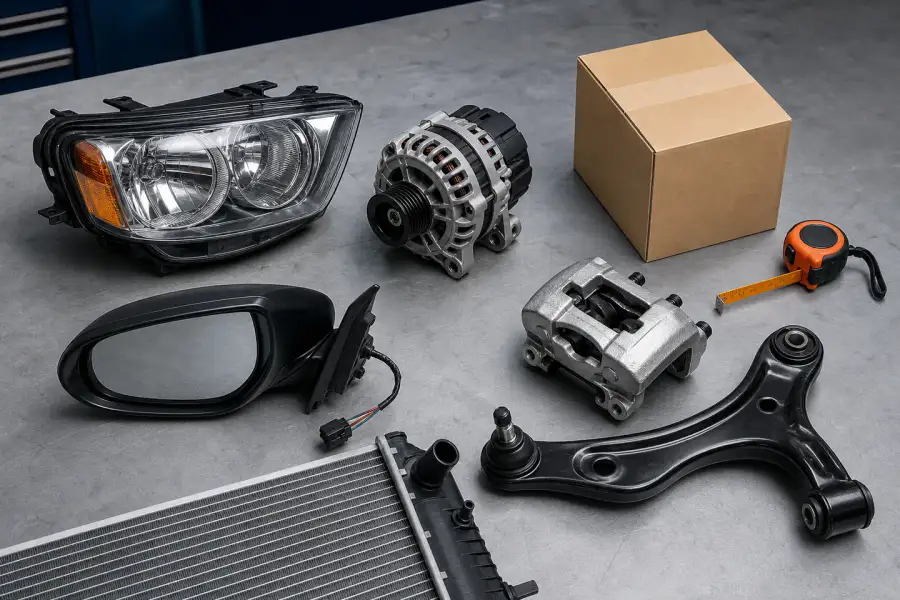
A new auto part generally refers to a replacement component that has not previously been installed or used as a service replacement. The exact packaging, manufacturer, distribution source, and included pieces can vary by component.
New does not automatically mean OEM. OEM identifies the original-equipment manufacturer or specification, while new describes condition or prior-use status. A new component may be OEM or non-OEM depending on the request and available source.
Doorstep Auto Parts confirms the available condition, source, manufacturer information, included pieces, and other relevant details during the sourcing process. Availability depends on the exact vehicle and component.
The right sourcing direction depends on the repair, vehicle, component, and information confirmed for the specific option.
New focuses on an unused replacement component. Manufacturer, source, included pieces, and OEM status should still be confirmed separately.
Used components have previously been installed and may include recycled or salvage-sourced assemblies matched to the vehicle.
Review Used Auto PartsOEM refers to original-equipment manufacturer identity or specification. An OEM component may be new or used.
Review OEM Auto PartsBrowse the existing system hubs to identify the component and matching details, then ask whether a new replacement option is available for the exact vehicle.
Power-producing assemblies, internal engine components, transmissions, axles, and driveline hardware.
Exterior panels, closures, trim, and structural body pieces used in collision repair and restoration.
Starting, charging, control-module, wiring, lighting, and powered accessory components.
Parts that regulate engine temperature and heat, cool, or move air through the cabin.
Components that control direction, alignment, ride quality, and wheel movement.
Hydraulic, mechanical, and electronic parts used to slow and hold the vehicle.
Components that store and deliver fuel and manage the air entering the engine.
Parts that route exhaust gases, manage heat, and support emissions-control functions.
Cabin assemblies, controls, trim, seating, storage, and driver-information components.
Visibility components including fixed glass, movable glass, mirrors, and window mechanisms.
Wheel-end components that support the vehicle and allow the wheels to rotate securely.
Occupant-restraint and collision-safety components that require careful position and fitment matching.
Chassis structures, crossmembers, protective panels, and mounting hardware beneath the body.
High-voltage propulsion, charging, power-conversion, and battery-control components for electrified vehicles.
These canonical component guides explain function, fitment, and identification. They support the request without implying that every listed component is available new or held in live inventory.
Visually similar components may use different mounting points, electronics, dimensions, calibrations, or configurations.
Provide the year, make, exact model, VIN, engine, drivetrain, body style, and production details when relevant.
Include the part name, OEM number, manufacturer number, label, casting, or original component identifiers.
Note trim, package, left or right side, front or rear position, connectors, dimensions, and installed options where applicable.
Review the condition, manufacturer, included pieces, and application details before authorizing an order or installation.
The same fitment-first request process is used without adding a separate condition selector to the form.
Use an established Make guide for model and fitment context, then request the exact replacement component and confirm whether a new option is available.
These broad Location guides cover used and OEM intent as well as delivery context. For a new-part request, provide the actual destination ZIP so the team can review the specific sourcing and shipping details.
Use existing guides to collect identifiers, compare sourcing terminology, and understand why visually similar components may not interchange.
Provide the destination ZIP with the vehicle and component details. Sourcing and delivery arrangements are confirmed for the specific request without implying local inventory or a warehouse in every area.
Review shipping and delivery detailsConfirm the exact condition, manufacturer, source, included pieces, and application for any option discussed.
No. New describes the condition or prior-use status of a replacement component. OEM describes its manufacturer or original-equipment identity. A new option may be OEM or non-OEM, so confirm both details separately during sourcing.
Yes. Submit the vehicle and component details for review. Whether a new replacement option can be sourced depends on the exact application, component, and available sources at the time of the request.
Provide the year, make, model, VIN when available, part name, original identifiers, and relevant details such as engine, drivetrain, body style, trim, position, or connector configuration.
The team reviews the submitted vehicle and component information, checks available sourcing options, and contacts you with relevant details. The website does not display live availability.
Not necessarily. The source and manufacturer can vary by component and request. Ask the team to confirm the source, condition, manufacturer, and OEM status of any option discussed.
Send the vehicle, component, and destination details. The team will review sourcing options and contact you.
Tell us what you drive and what part you need. Our team will review your request, check available options, and contact you.